
%20(1).jpg)

We finished up our 2025 Innovation Advisory Council calendar with three insightful, topic-focused sessions that revealed both the urgency and the opportunity ahead as companies seek to modernize responsibly and create lasting value.


Topic-Focused Innovation Advisory Councils: Year-End Insights
Data & AI | Cybersecurity | Modern IT Infrastructure
Throughout our Innovation Advisory Councils this year, enterprise leaders confronted a common reality: technology transformation is accelerating faster than organizational structures, processes, and technical foundations can support. Across Data & AI, Cybersecurity, and Modern IT Infrastructure, a clear set of themes emerged around the pressures shaping 2026 priorities. Organizations are shifting from experimentation to economic and operational outcomes, reassessing legacy systems, strengthening security posture amid heightened automation from threat actors, and confronting the organizational challenges that accompany rapid change.
As part of our continued evolution of the Innovation Advisory Council, we are bringing together the Technology Practitioner Council and our broader executive community into a unified, topic-focused council model in 2026. These Councils are designed around the technology domains driving the most urgent conversations today: Cybersecurity, Data & AI, and Modern IT Infrastructure. This approach preserves the practitioner-level depth valued by directors and managers of IT while intentionally expanding participation to technology executives seeking focused, forward-leaning dialogue. Each topic-focused Council will convene quarterly, creating a consistent forum for deeper exploration, shared learning, and practical insight across the technology leadership spectrum.
We finished up our 2025 Innovation Advisory Council calendar with three insightful, topic-focused sessions led by our Chief Technology Evangelist, Troy Cogburn. These sessions revealed both the urgency and the opportunity ahead as companies seek to modernize responsibly and create lasting value. Below are key highlights and takeaways.
Key Takeaways
1. AI Adoption Is Now Business-Led Rather Than Technology-Led
Organizations are shifting AI ownership toward business units as use cases become more operationally focused. Technical teams remain critical for guardrails, but real value emerges when those closest to the business problem can guide solution design.
2. Security Posture Must Evolve as Attackers Operationalize AI
Threat actors are utilizing automation to expedite reconnaissance and vulnerability discovery. Continuous validation, real-time visibility, and more integrated security stacks are becoming essential as organizations move toward proactive, not reactive, defense models.
3. Infrastructure Modernization Is No Longer Optional
Legacy systems are creating operational drag and slowing AI adoption. Companies are modernizing under pressure from rising data volumes, cloud complexity, cost management needs, and performance requirements for AI workloads.
4. Talent, Process, and Governance Are Emerging as the True Differentiators
Across data, security, and infrastructure, it became clear that tools alone won’t drive transformation. Clear governance, workforce enablement, and cross-functional alignment are now core requirements for sustainable progress.
Data & AI
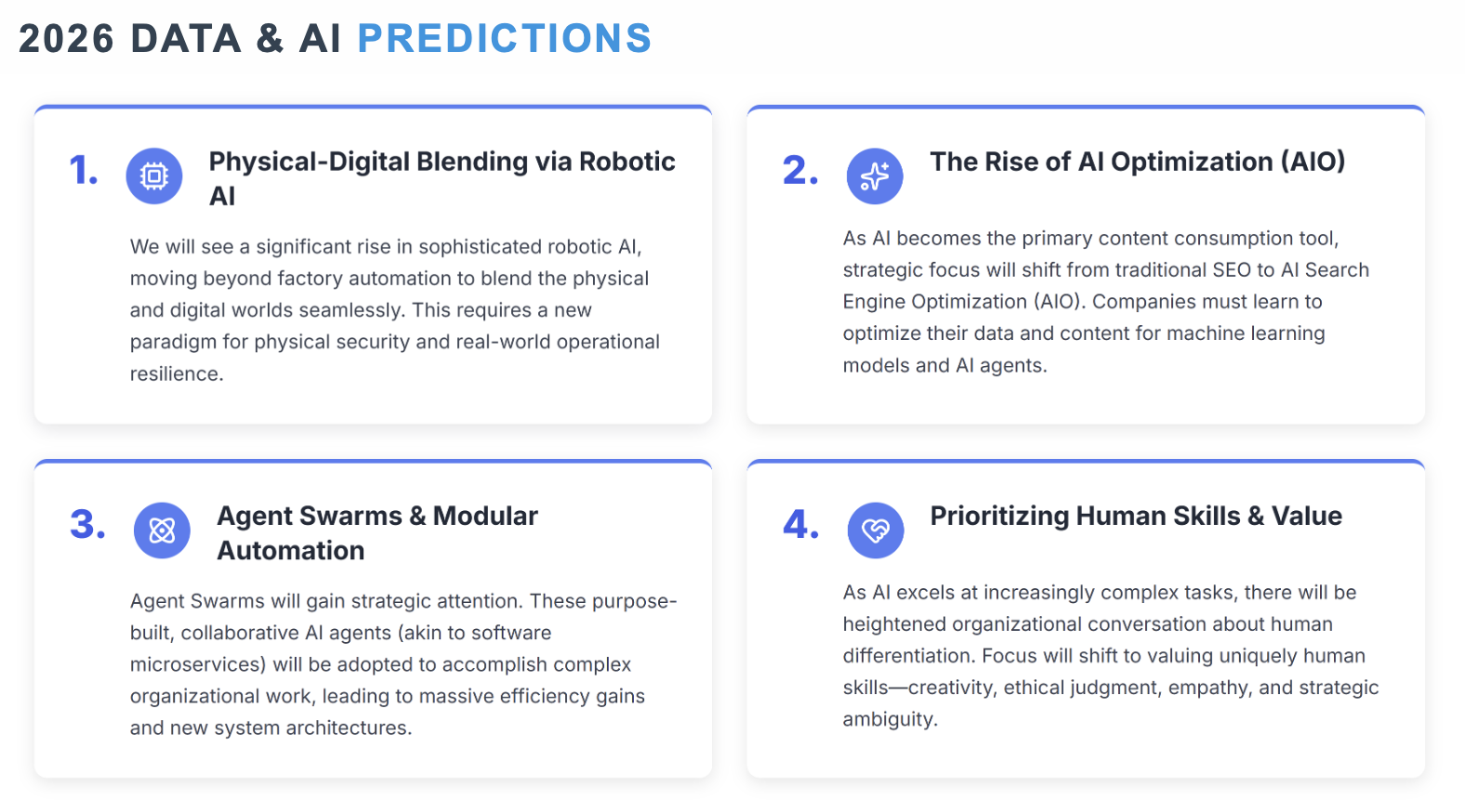
AI adoption is no longer defined by experimentation. The most successful organizations are moving toward focused, outcome-oriented initiatives anchored in specific business problems, such as automating slow workflows, improving customer interactions, elevating decision-making, and augmenting teams with new capabilities. This shift is reshaping how enterprises prioritize AI, with business units driving many of the most impactful use cases. AI has transitioned from a technical curiosity to an operational tool, and its effectiveness depends on tight alignment between business value and technical feasibility.
These additional trends reinforce how rapidly the AI landscape is evolving and what is required for adoption to mature across the enterprise:
- AI success increasingly depends on the quality, accessibility, and consistency of enterprise data rather than model sophistication.
- The widening gap between AI adoption and governance is creating emerging risks that organizations are only beginning to quantify.
- Practical use cases are outperforming experimental initiatives, highlighting the importance of measurable business outcomes.
- Scaling AI requires intentional operating models that integrate business ownership with technical guardrails.
This evolution exposes a growing need for maturity behind the scenes. Many organizations are pushing forward on AI while still grappling with fractured data ecosystems, inconsistent data quality, and unclear accountability for model oversight. Formal governance frameworks remain limited, even as AI touches more processes and employees across the enterprise. The next phase of AI will depend on strengthening data foundations, implementing responsible-use guardrails, and creating operating structures that allow innovation to scale without amplifying risk. The organizations that master this balance will be positioned to convert AI momentum into a durable advantage.
Cybersecurity
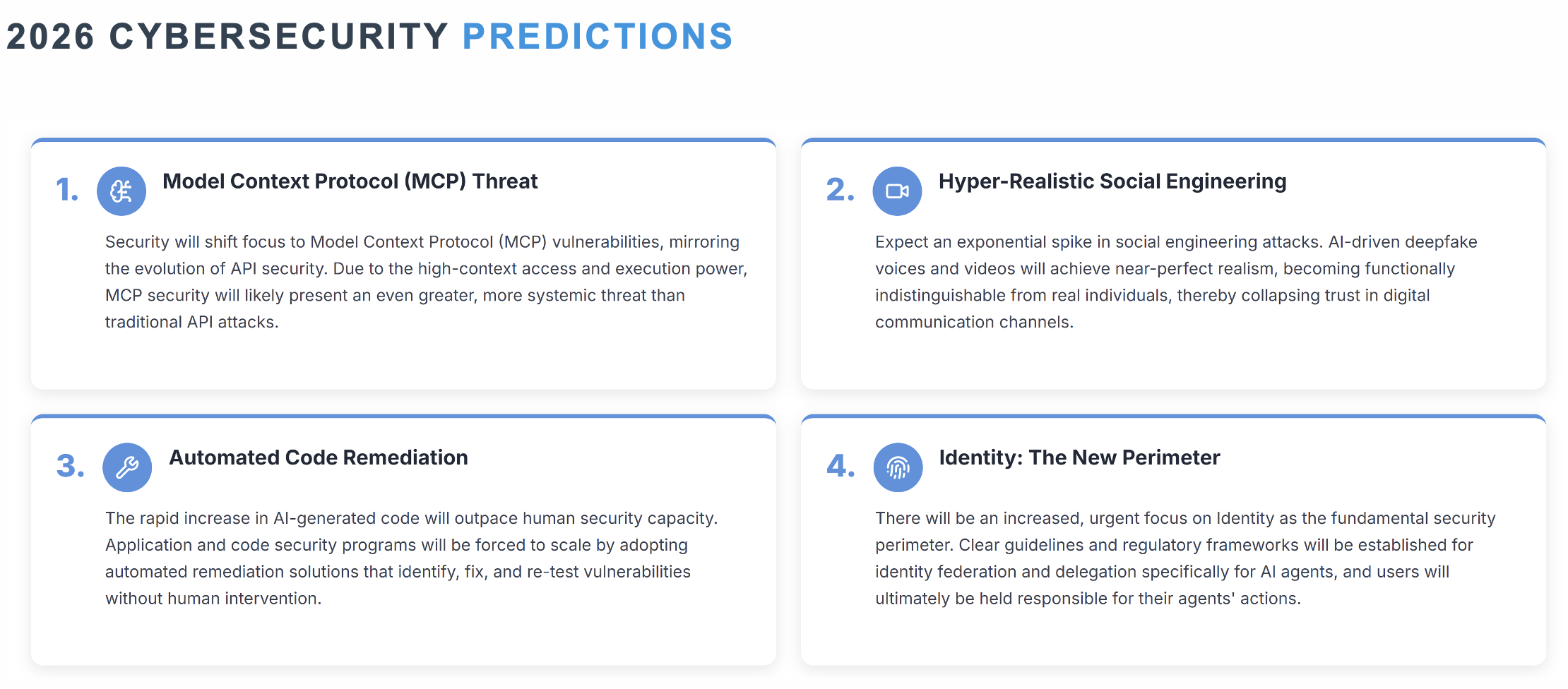
Security teams are facing a threat landscape that is shifting faster than traditional defenses can adapt. Automation and AI are accelerating adversary capabilities, enabling attackers to scale reconnaissance, exploit misconfigurations more efficiently, and craft highly targeted attacks across cloud and SaaS environments. Organizations can no longer rely on periodic assessments or fragmented visibility; maintaining resilience now requires real-time awareness of the active attack surface and the ability to prioritize true areas of exposure.
These additional patterns are shaping how enterprises must rethink their security posture and operational focus:
- Identity remains one of the most persistent sources of vulnerability due to misconfigurations, privilege sprawl, and inconsistent controls across distributed environments.
- Automation is reshaping both attack methods and defensive requirements, making manual detection and response increasingly insufficient.
- Consolidation of security tooling is becoming essential to reduce operational noise and improve accuracy in risk prioritization.
- Modern security strategy requires an emphasis on resilience, ensuring systems remain functional even as threats evolve.
As security environments grow more complex, organizations are recognizing the need to simplify architectures, strengthen identity controls, and improve signal fidelity across tools and platforms. Many teams are constrained by alert overload, fragmented systems, and inconsistent visibility, which limits their ability to focus on the risks that matter most. Moving forward, effective security programs will prioritize integration, automation, and foundational governance—reducing complexity while elevating the organization’s ability to respond with speed and precision. Those that successfully modernize their security foundations will be better positioned to protect the enterprise in an increasingly asymmetric threat landscape.
Modern IT Infrastructure
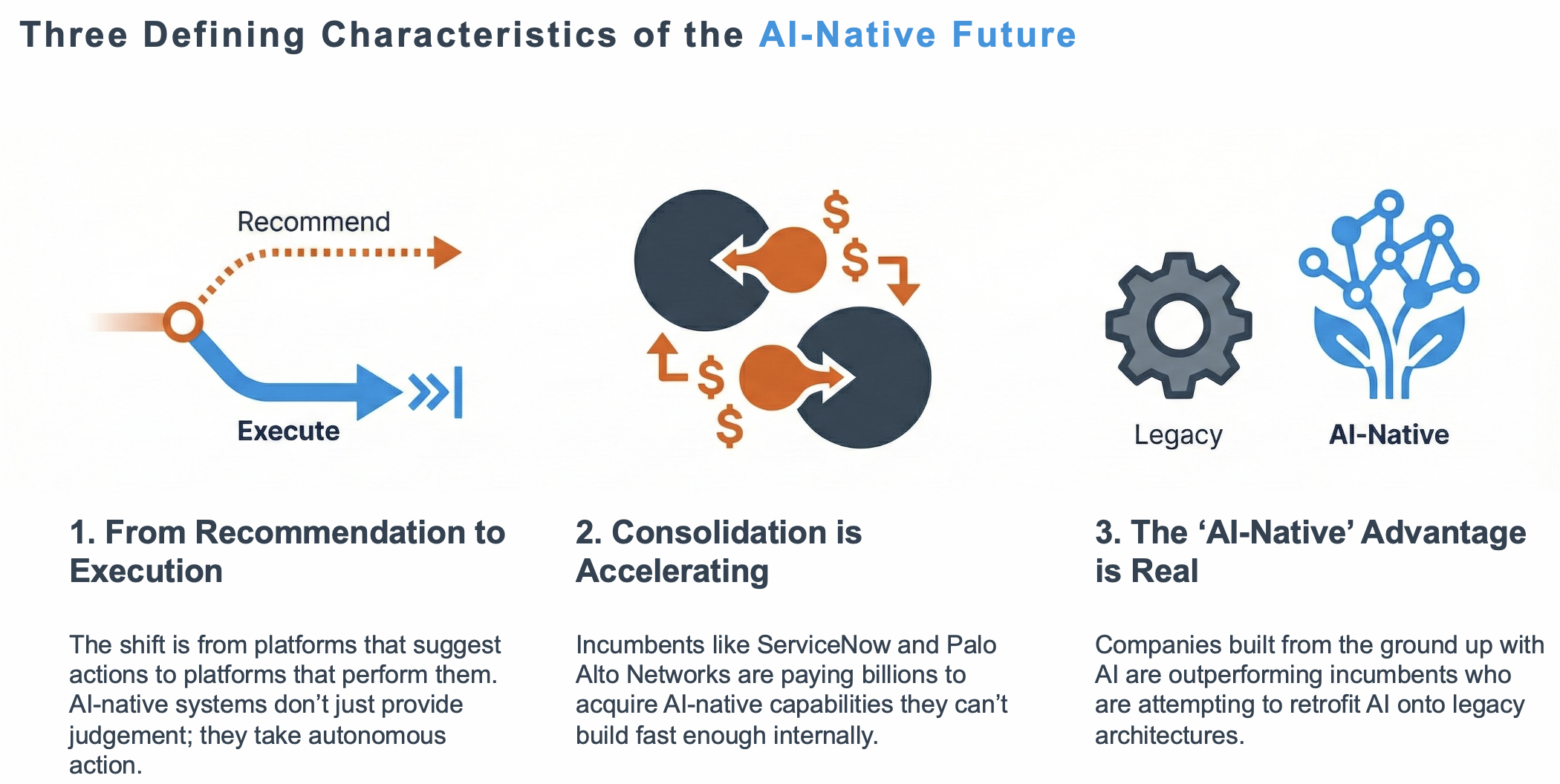
Infrastructure has become a determining factor in how effectively organizations can innovate, operate, and scale. The growing demands of AI workloads, rising data volumes, and increasingly distributed environments are exposing architectural limitations that were never designed for today’s performance expectations. Technical debt is no longer a background issue—it directly impacts cost efficiency, agility, and the ability to execute on transformation initiatives. As enterprises shift toward more intentional hybrid and multi-cloud strategies, the need for a modern, scalable, and predictable infrastructure foundation has never been more urgent.
Several broader forces are influencing how organizations prioritize infrastructure modernization and prepare for the next wave of enterprise demands:
- Rising data volumes and AI-driven workloads are redefining what modern infrastructure requires in terms of throughput, reliability, and elasticity.
- Technical debt is constraining transformation velocity, increasing operational friction, and elevating long-term cost structures.
- Hybrid strategies are maturing as organizations balance performance needs, governance considerations, and financial optimization.
- Automation and standardization are becoming critical mechanisms for managing complexity and maintaining predictable operations at scale.
As modernization accelerates, organizations are focusing on simplification and unified management to navigate growing complexity. Automation is emerging as a key enabler for controlling costs, improving observability, and reducing operational burden. Teams are also reassessing workload placement to align performance characteristics, data governance, and cost predictability. In this next phase, infrastructure is no longer merely a support layer—it is a strategic asset that shapes enterprise resilience, AI readiness, and long-term competitiveness. Organizations that invest in these foundational upgrades will be better positioned to deliver consistent performance, reduce risk, and enable innovation across every part of the business.
Conclusion
Overall, insights from Data & AI, Cybersecurity, and Modern IT Infrastructure highlight a crucial shift in enterprise transformation strategies. Focusing solely on isolated technology investments won't suffice; instead, success depends on strong foundational support. AI needs reliable data and governance to grow responsibly, while Cybersecurity requires continuous monitoring and simplified systems to counter rapidly evolving threats. Modern infrastructure must adapt to meet the increasing speed, scale, and performance demands of today’s digital enterprises.
The way forward involves alignment: aligning technology plans with business goals, governance with innovation, and operational models with modern risks and complexities. Organizations that adopt this approach will be able to move quicker, operate more securely, and maximize the value of their tech investments.
We're excited to unpack these topics further in our Topic-Focused Advisory Councils next year. As we look ahead to the 2026 Innovation Advisory Councils, we invite technology leaders to continue shaping this dialogue. The Council offers a unique opportunity to access forward-looking research, benchmark strategies with peers, and influence the direction of emerging technologies across the enterprise landscape. Now is the time to align teams, strengthen foundations, and prepare for the next chapter of innovation together. Join our Innovation Advisory Council here.
Spread the word.
Thousands of subscribers receive our newsletter every week breaking down what's happening across the technology community.
Join them today.
Keep Reading
Creating a Culture of Innovation: Lessons from 2025
Creating a culture of innovation means staying curious, supporting teams through uncertainty, and continuously raising the bar for what’s possible. The technology will keep changing. The pace will keep accelerating. But organizations that invest in their people and cultivate the right culture will always find their next summit and the energy to climb it.

.jpg)

.png)
Change Management Guide: How to Enable Real Adoption and Long-Term Value of Your Technology Initiatives
Change is a constant in today’s enterprise environment, but successful adoption doesn’t happen on its own. Organizations that plan, structure, and support change intentionally are better equipped to see results—faster, with less disruption, and with greater alignment across teams.

Innovation Delivered to Your Inbox

